
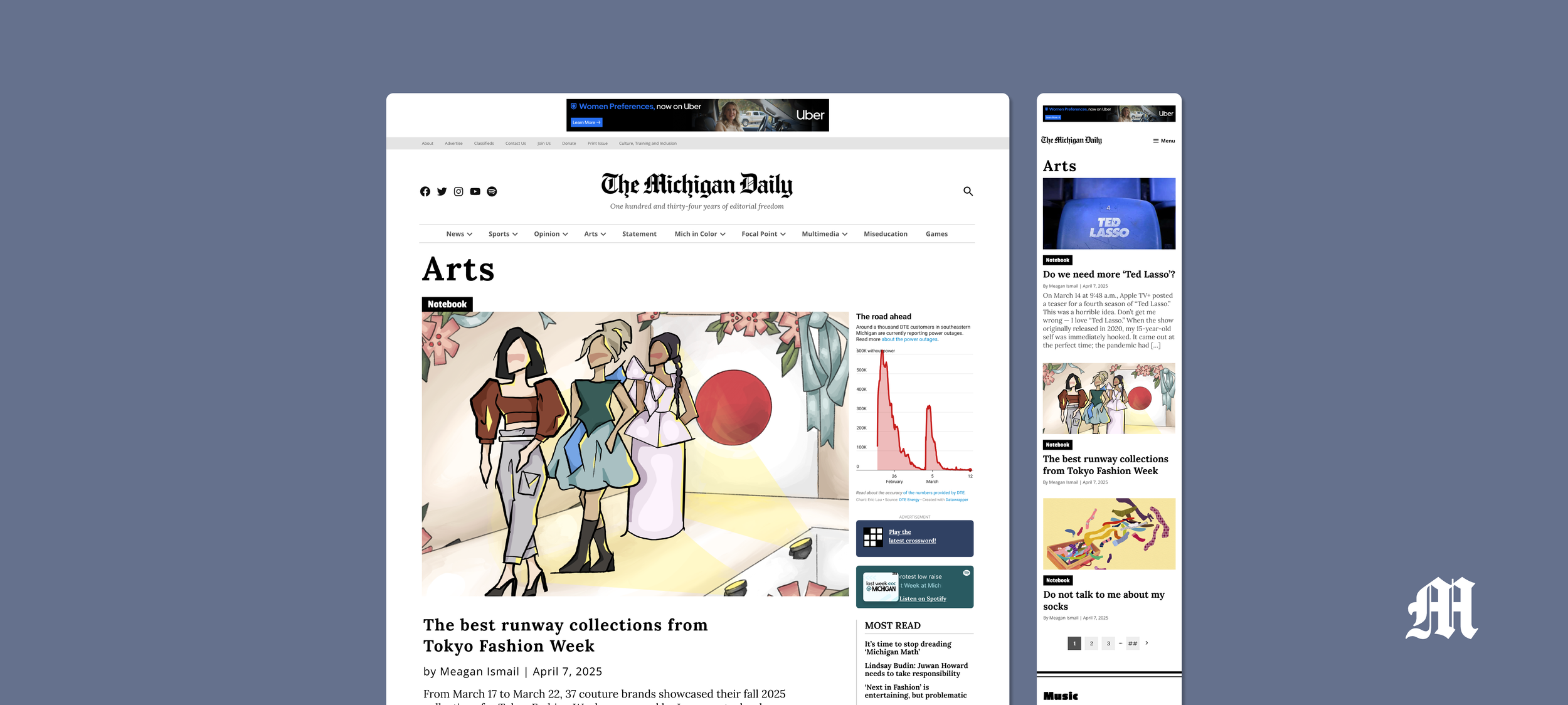
The Michigan Daily Arts
WHAT IS THE TMD ARTS ?
Over two months, I worked with another designer on redesigning The Michigan Daily’s Arts section and subcategories to enhance content discoverability and editorial storytelling. We restructured navigation and reimagined page layouts to better support how readers browse and engage with media content.
ROLE
UX Designer
TEAM
2 Designers, 1 Project Manager
TOOLS
Figma, FigJam
THE PROBLEM
Readers struggle to discover and differentiate content within the Arts section due to unclear categorization.
The Arts’ landing page lacked clear organization between the 7 subcategories (ex. Books, Film, Music, etc.), making it difficult for readers to identify where articles belonged or quickly find content aligned with their interests. Additionally, there was no consistent way to distinguish between different types of articles, Reviews and Notebooks. As a result, the section felt visually inconsistent and harder to navigate, especially as content volume grew.
THE SOLUTION
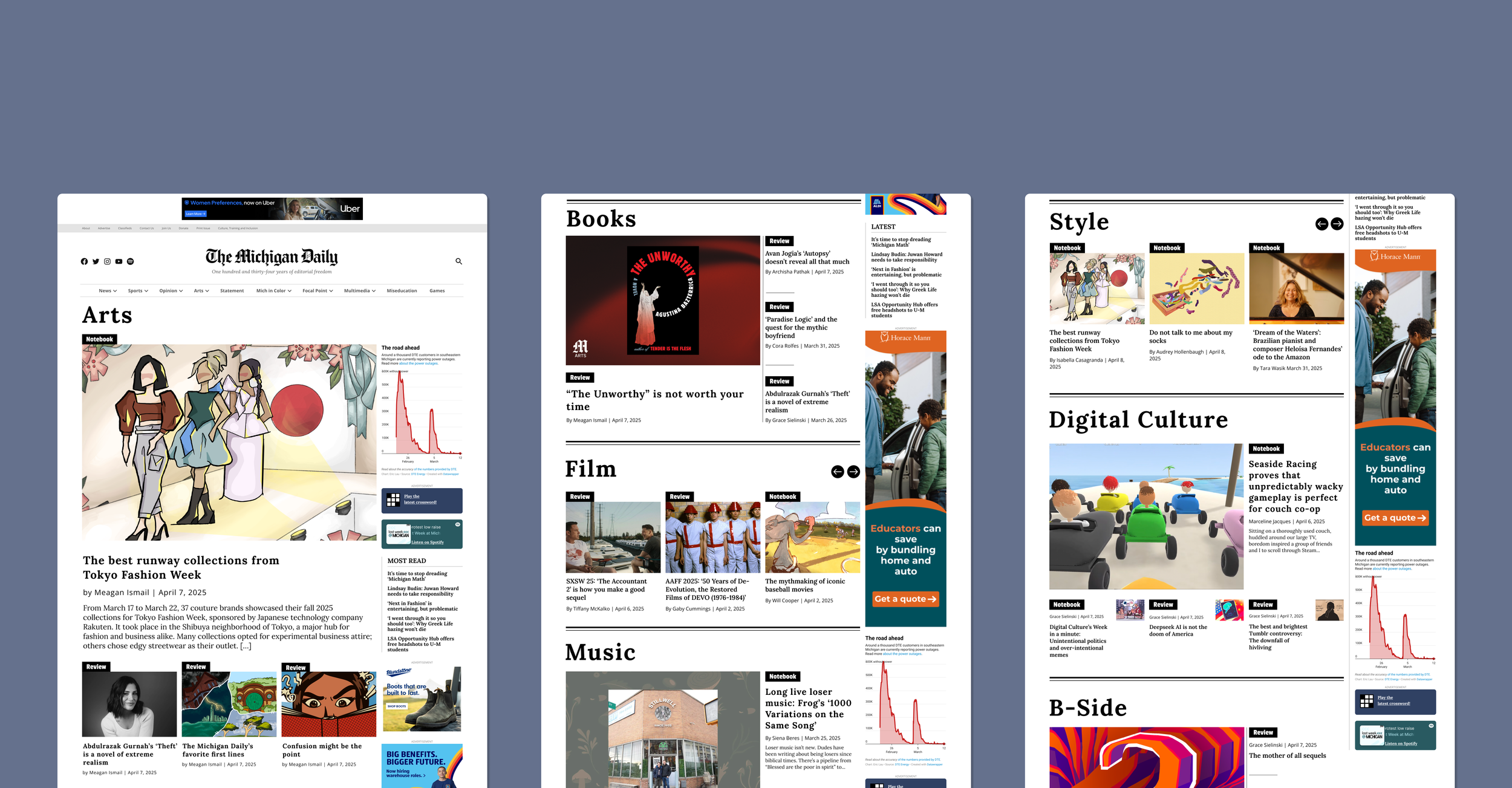
An Arts landing page that enables readers to browse recent stories while easily navigating into specific subcategories. Articles are tagged as Reviews or Notebooks, to improve scannability and help readers quickly understand the nature of each piece. The redesign also introduces more dynamic and varied layouts for showcasing articles, creating a more engaging experience. This is supported by streamlined navigation across pages and a refreshed visual system, resulting in a cohesive identity that remains consistent with The Michigan Daily’s brand guidelines.
IDEATION
How might we improve content discovery and structure within the Arts section?
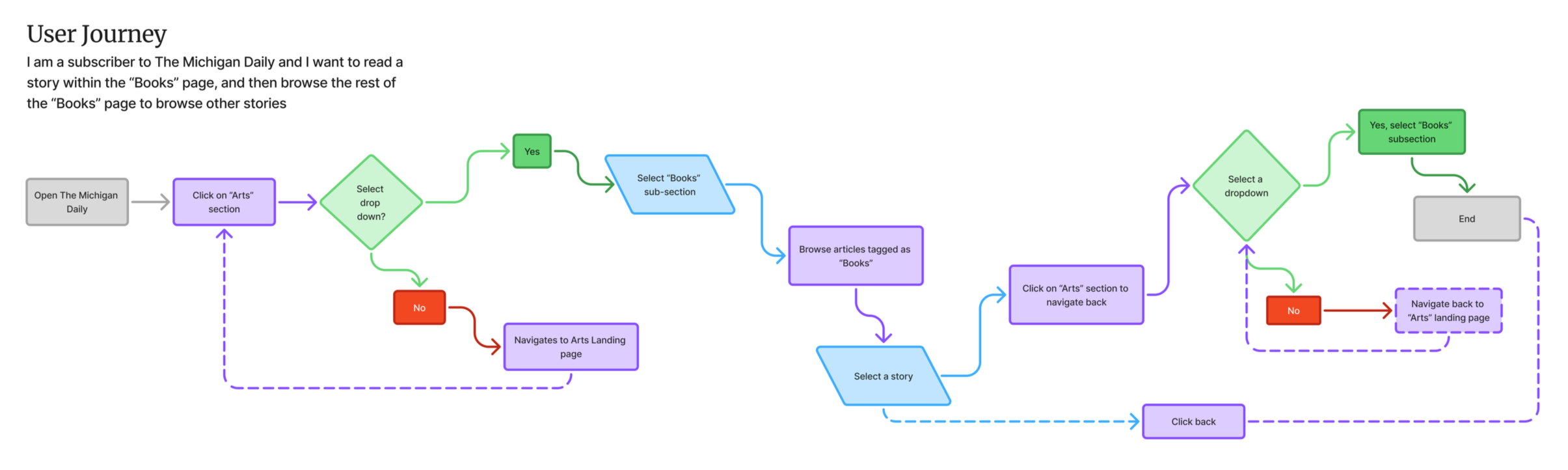
To explore this, I started by mapping a user journey to understand how readers browse and navigate between articles and subcategories, helping identify key opportunities to improve organization and engagement.
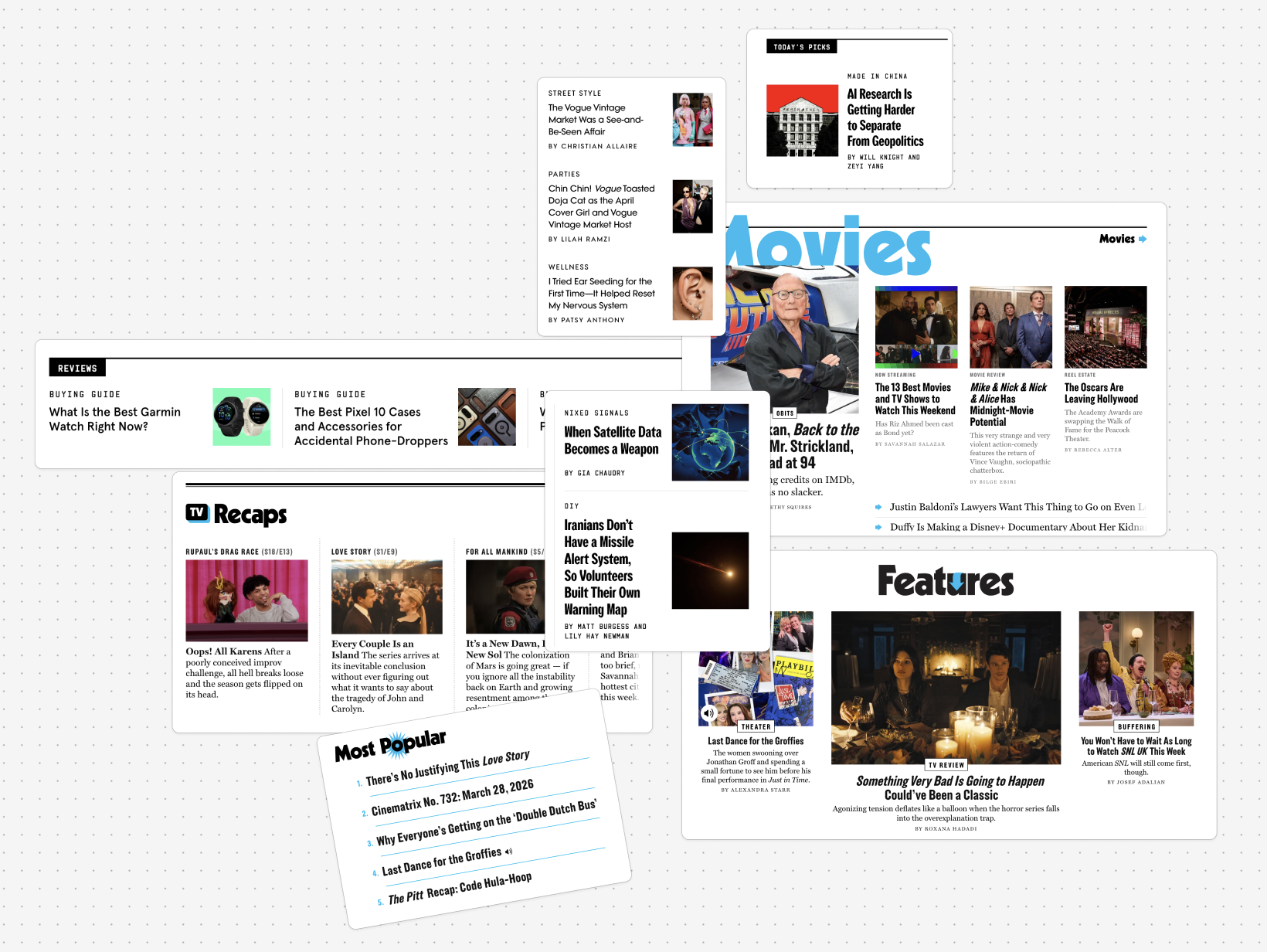
As I began thinking about layouts, I analyzed patterns and drew inspiration from other digital publications (Vulture, Wired, Vogue) referenced by the Arts Managing Editor and examined how they structure, categorize, and present content.
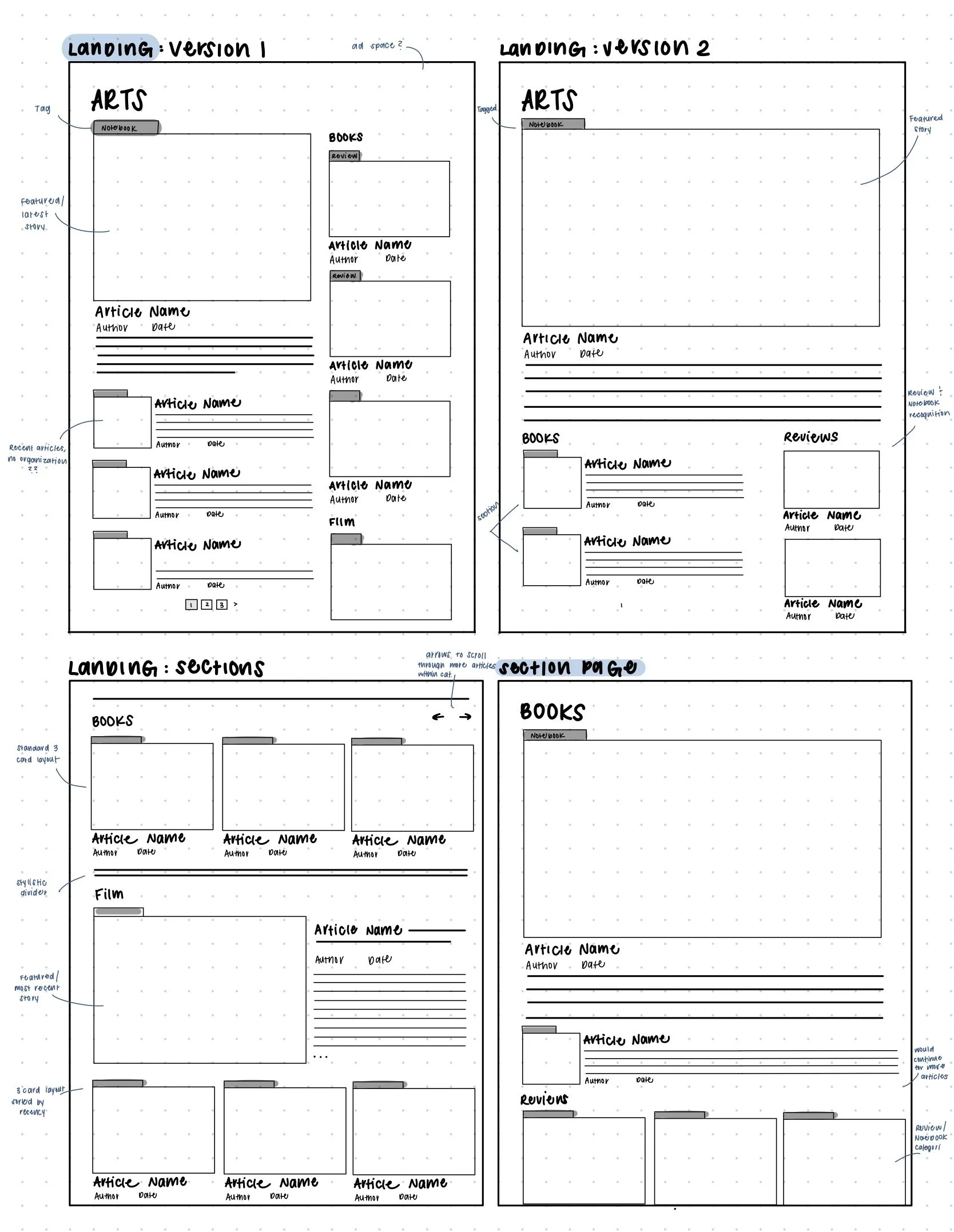
I then created low fidelity sketches to explore layout directions and test how different approaches to content organization and hierarchy could come together. In parallel, the other designer also developed lo-fi concepts, allowing us to generate a broader range of ideas.
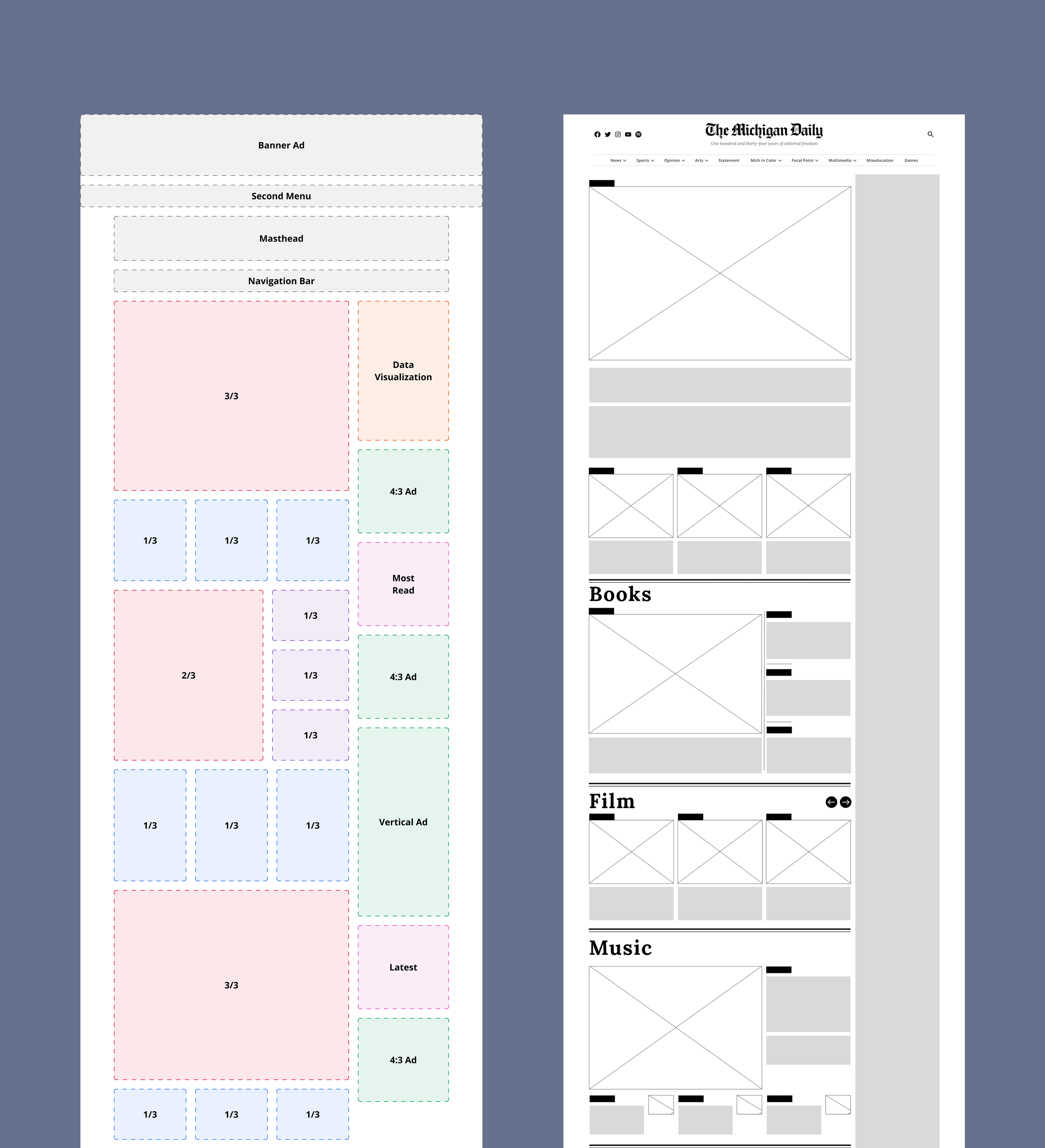
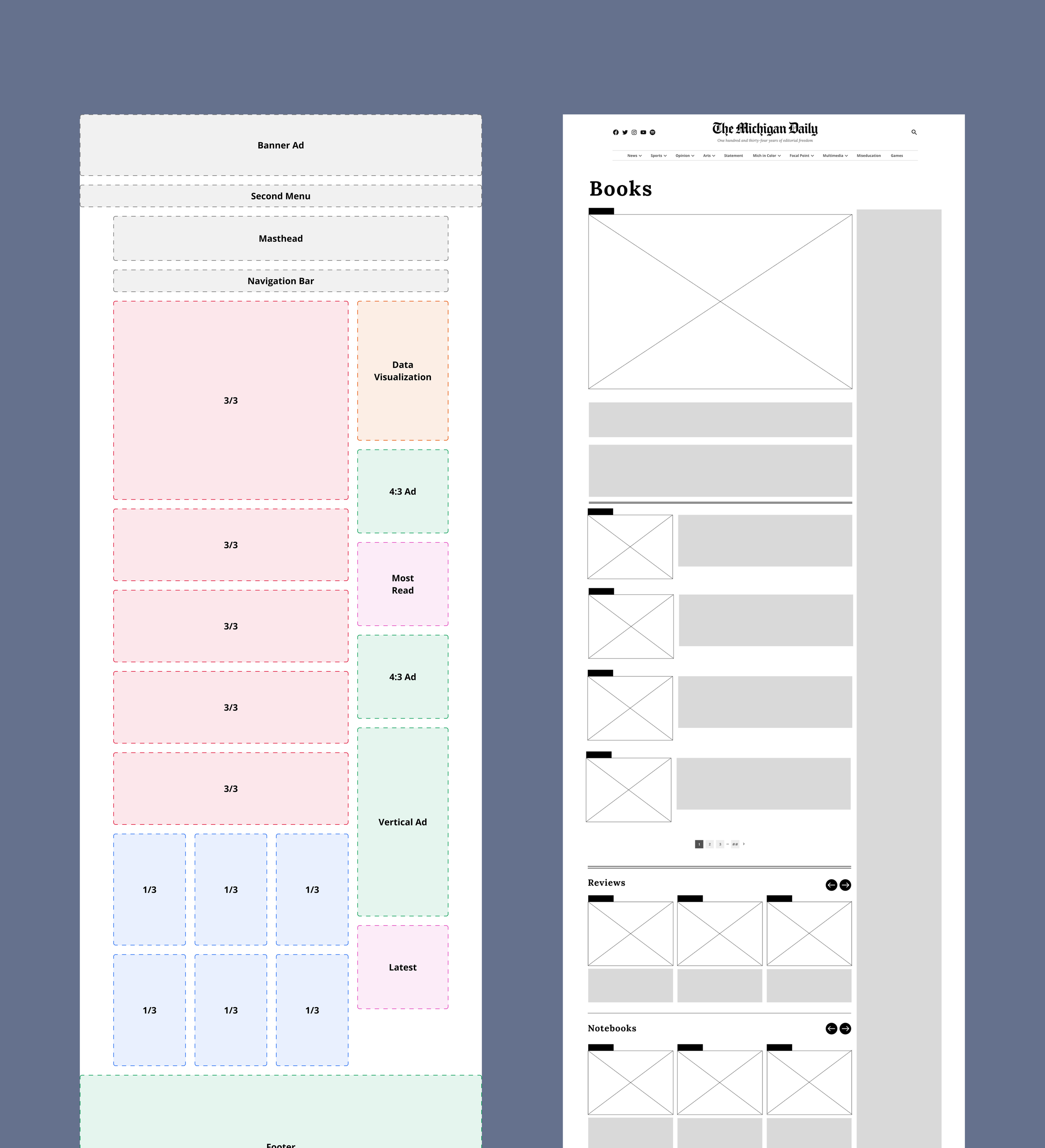
We then consolidated our layout explorations into mid-fidelity wireframes in Figma, combining ideas from both designers. At this stage, we focused on testing different structures of articles (image-based vs. text-based) and refining them through feedback critiques with our PM.
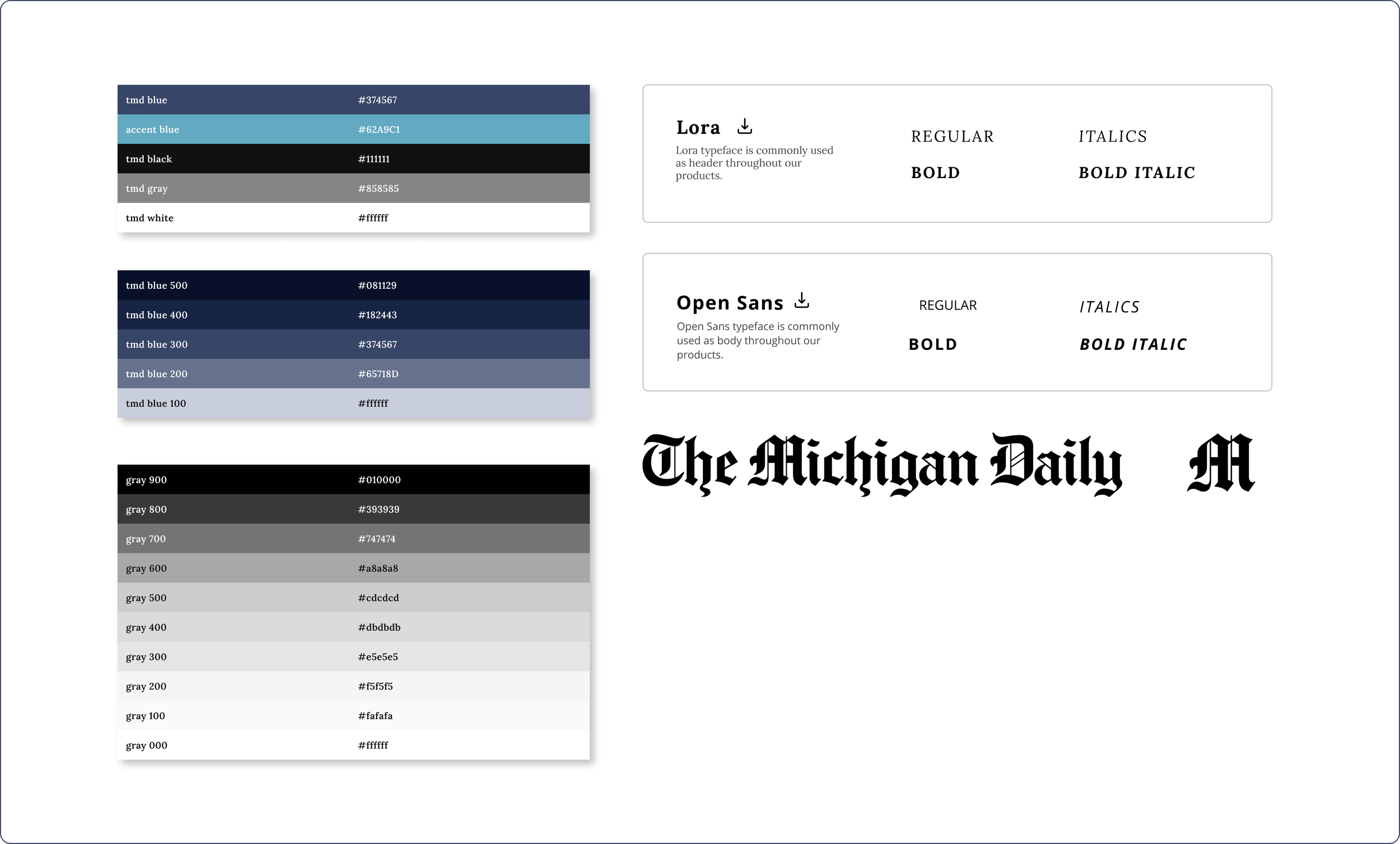
I applied The Michigan Daily’s design system, incorporating established colors, typography, and branding elements to create a cohesive and consistent visual foundation.
FINAL DESIGN

RESULTS & REFLECTION
The final designs delivered a more structured and visually engaging Arts experience, which I successfully handed off to developers on the The Michigan Daily team for implementation.
Through this project, I learned how to collaborate closely with a product manager to set priorities, manage handoffs, and balance editorial needs within technical constraints. Working alongside another designer also strengthened my ability to align on ideas and iterate collaboratively.
This experience deepened my understanding of designing within real-world editorial constraints—considering factors like design systems, ad placements, and other structural specifications while still creating a cohesive user experience.